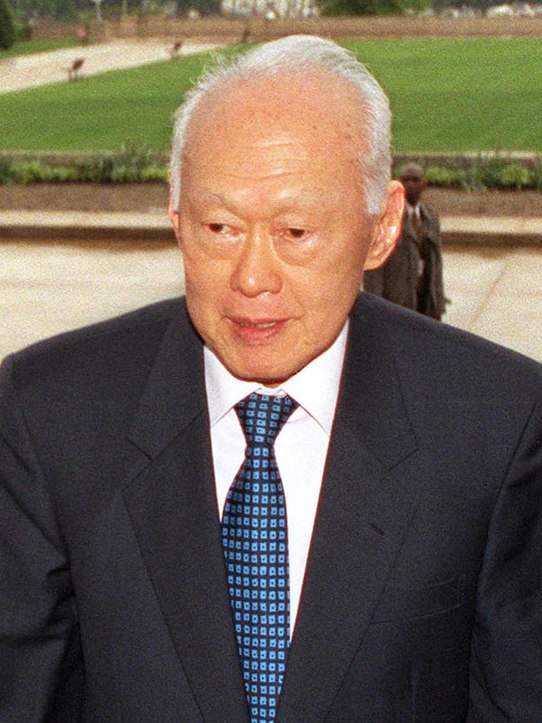
Wednesday, September 24, 2008

Singapore Still Least Corrupt Country In Asia. Malaysia Mediocre As Usual

Just like last year, Singapore has been ranked the fourth least corrupt country in a global corruption survey.

It also retains its status as Asia's least corrupt country on the Corruption Perceptions Index, released yesterday by Transparency International (TI).

Conducted annually by the Berlin-based non-governmental corruption watchdog, the index studies the level of public sector corruption in 180 countries and ranks them according to scores. A score of 10 indicates highly clean and 0 means highly corrupt.

It defines corruption as the abuse of public office for private gain and measures the degree to which corruption is perceived to exist among public officials and politicians.

In this year's index, Singapore scores 9.2, behind joint-leaders Denmark, Sweden and New Zealand, all of which obtained a 9.3 score. At the other end are Somalia (1.0), Iraq and Myanmar (1.3) and Haiti (1.4).

Asian economies which placed significantly are Hong Kong (12th), Japan (18th), Taiwan (39th), South Korea (40th) and Malaysia (47th).

Last year, Singapore was ranked joint-fourth with Sweden, behind Denmark, Finland and New Zealand. It came in fifth from 2003 to 2006.

Dr Johann Graf Lambsdorff of the University of Passau in Germany, who draws up the index, said Singapore's long tradition of strong oversight is an example for best practices in Asia.

Mr Liao Ran, TI's senior programme coordinator for East and South Asia, said factors contributing to Singapore's ranking included a strong commitment from political leaders; education, which has bred a culture of integrity among citizens; a sound and comprehensive legal framework; and an effective anti-corruption agency.

TI said the index continues to show there is a link between corruption and poverty. It also underlines the benefits of fighting corruption.

'Evidence suggests that an improvement in the index by one point increases capital inflows by 0.5 per cent of a country's gross domestic product and average incomes by as much as 4 per cent,' Dr Lambsdorff said.

TI also said the index shows that wealthy countries such as France and the United Kingdom, whose scores have slipped, need to step up their anti-corruption mechanisms.

Professor Neo Boon Siong, director of the Asia Competitiveness Institute of the Lee Kuan Yew School of Public Policy, said Singapore's fourth position was a significant achievement.

A good ranking helps attract investments as it makes doing business here more predictable and cheaper, he said.

As to whether Singapore can reach the top of the index, he said: 'The real difference among the top leaders is not very wide. The actual ranking itself is not the main issue, because being ranked among the top few is a clear recognition the country is corruption-free.'

The index is computed with data from 13 corruption-related polls and surveys carried out this and last year by institutions like the World Economic Forum's Global Competitiveness Report. (Straits Times, Singapore)

***** Statements like
'strong commitment from political leaders, culture of integrity and an effective anti-corruption agency' are alien concepts to the ketuanan-obsessed mutton heads who rule Malaysia. No wonder the score is Singapore - 4, Malaysia - 47. Malaysia Boleh!

Labels: , , , , ,

Friday, August 22, 2008

M'sia Quietly Drops 'Pulau' From Pulau Batu Puteh As S'pore Claims Exclusive Economic Zone

From The Straits Times, Singapore
Malaysia has dropped 'Pulau', the Malay term for island, from its name for Pedra Branca.

The Malaysian government, which has always called the island Pulau Batu Puteh, is now calling it just Batu Puteh, reported the Chinese-language paper Oriental Daily News.

Announcing the change at a press conference earlier this week, Foreign Minister Rais Yatim said it was doing so as it considered the territory as having failed to meet the internationally recognised criteria for an island, that is, land inhabited by humans that had economic activity.

He told reporters that the Singapore Government wanted to claim an exclusive economic zone (EEZ) around it but said this was not possible because it did not qualify as an island.

In his view, it was a mere granite outcrop devoid of vegetation, water sources and human habitation.

Dr Rais said Malaysia had considered it an island in the past, but decided to abide by international standards after the dispute over it with Singapore was referred to the the International Court of Justice (ICJ).

In May, the ICJ had awarded Pedra Branca to Singapore and the Middle Rocks to Malaysia, but ruled that the South Ledge outcrop belonged to whoever owned the territorial waters it sat in.

Dr Rais said the government will set up a research centre on the South Ledge, which he claimed belonged to Malaysia because of its proximity to Middle Rocks.

He also criticised Singapore's announcement about the EEZ.

'Singapore made the announcement without consulting Malaysia. In any case, Singapore's claim of up to 12 nautical miles of territorial waters as well as an EEZ around Batu Puteh was unreasonable and contrary to international law,' Oriental Daily News quoted him as saying.
***** Another case of Singapore outmaneuvering our foreign ministry mandarins. The problem lies in the sad fact that while Singapore recruits the best talents in its crucial departments, we are still hampered by racial quotas and the promotion of mediocre personnel. What pride can there possibly be in packing these offices with so many Malays if they can't get the job done?

Many stories abound about the government either not hiring top notch non-Malay experts or treating them so shabbily by denying them promotions that they have been forced to leave. We are now merely 'reaping' the effects of the racism our government has been sowing over the past forty years.

Labels: , , , , ,

Saturday, July 12, 2008

Singapore's Success Due To Able Leaders Who Have High Integrity And Are Not Corrupted: Lee Kuan Yew

Singapore has become successful and earned the respect of the world community today because it has been governed by able leaders who have high integrity and are not corrupted, former Prime Minister Lee Kuan Yew said Friday night.

He said that when Singapore became independent, the country did not have any wealth or resources to develop and, in addition, was facing many threats such as from the communist terrorists and the workers' union and even problems inside his People's Action Party (PAP).

But with a first-class team of able and practical leaders who had strong will and belief in the country, Singapore managed to get out from the bad situation, Lee said at a dialogue session at the Economic Society of Singapore, here.

He said the leaders then, including himself, had to make tough decisions to develop Singapore, including changing the labour laws, uniting the people by putting the Malays, Chinese and Indians in the same flats so that they could mix together, and making the people a workable society.

He said Singapore progressed well until today because it had been managed by dedicated leaders who had a high sense of honour and level of integrity, honesty and competency and were not corrupted.

Lee also said that the country was different from others as it had no room for making mistakes.

Lee, who is currently Minister Mentor, said the country made the right decision by investing in defence and education by allocating the biggest budgets for the two sectors.

Now the "little red dot", which many Singaporeans and others refer to Singapore as, was able to defend itself and no one could just march into the country and take it over, Lee said.

He said the government also made the right move when it introduced English in the education system and put the mother tongue languages of the Chinese, Malays and Indians on equal footing.

Lee said the English language had not only become the world's most spoken language but was also the language of the Internet world, and this had benefited the Singaporeans most.

The former prime minister also said that the present leadership should now look for new leaders to replace them when they retired in less than a decade from now.

He said that if they failed to recruit new leaders, the country would be taken over by the opposition parties who would have their own capable leaders, but he doubted that it could happen. (Bernama)

***** Singapore is of course not a perfect country. To be sure, the island nation has its share of covert discrimination and sometimes obvious prejudice, mirroring the true feelings of sections of the majority community there. But they are nowhere near the type of overt government-sponsored racism prevalent in Malaysia.

One cannot argue with Mr Lee Kuan Yew's claim that
his country is governed by able leaders who have high integrity and are not corrupted. The converse however is true of our own country. We truly are the antithesis of Singapore, but somehow Umno seems to be genuinely proud of that fact!

Labels: , , , , ,

Sunday, June 01, 2008

Malaysia's Grand Economic Plan Hit By Politics, Apathy

Malaysia's plan for a showpiece economic zone in its south is in doubt because of the uncertain fate of the country's prime minister and a lukewarm response from big investors in nearby Singapore.

On paper, Prime Minister Abdullah Ahmad Badawi's pet project to develop the 2,200 sq kms (850 sq miles) of land in southern Johor state into a economic zone to complement the rich but land-scarce city-state of Singapore looks good.

The area has so far drawn $10.5 billion in investment, much of it from the Middle East, riding on investor hopes the area will become a hinterland for the city-state the way that China's booming Shenzhen, once a tiny fishing village, complements neighbouring Hong Kong.

The Iskandar Malaysia zone, three times bigger than Singapore, would be Malaysia's largest economic zone. The government says it should create 800,000 jobs and attract $100 billion in investment over 25 years.

Its proponents say it could be Southeast Asia's answer to China's Pearl River delta, a manufacturing heartland that turns out more than a quarter of China's worldwide exports.

But Malaysia's track record in getting such grand projects off the ground is patchy and Singapore developers are looking to booming China and India instead, worried the plans will be shelved if Abdullah loses power.

"It's Abdullah's project. If he's not around, no one knows what's going to happen as different prime ministers will have different priorities," said Suan Teck Kin, an economist at Singapore's United Overseas Bank (UOB).

Abdullah's position weakened after the poor showing of his ruling coalition in March polls and speculation is rife he may be forced to resign.

"Given this kind of political vacuum in Malaysia, I don't think anyone will be rushing into Iskandar," said Song Seng Wun, a Singapore-based economist at Malaysian bank CIMB.

Expensive government development projects have been for years Malaysia's answer to regional economic disparities in a country spread over the Malay peninsula and parts of the island of Borneo.

Their success has been mixed at best. UOB's Suan cited a proposed IT zone near the capital Kuala Lumpur as an example of a project that is struggling after its sponsor and Abdullah's predecessor, Mahathir Mohamad, left office.

SINGAPORE WARY

State investment arm Khazanah Nasional, which has opened a marketing office in Singapore to promote the Iskandar zone, brushed off political concerns and said investors are committed to Malaysia.

Mainly Muslim Malaysia has been a magnet for Middle Eastern investors flush with petrodollars who have been snapping up banks, hotels and malls.

Abu Dhabi investment arm Mubadala Development Co is leading a consortium to develop a multi-billion dollar city within Iskandar. Kuala Lumpur has also established itself as a leading centre in Asia for the burgeoning Islamic Finance market.

But state-linked Singapore developers have been cool to Iskandar. Many analysts say for it to really take off, it needs Singapore firms such as CapitaLand to develop on land that costs as little as 1/30th of Singapore land.

"Singapore investments could be very crucial for Iskandar," said Malaysian political analyst Khoo Kay Peng. "Malaysia needs investments in high-technology areas such as biotech, rather than just a pure real estate play," he said.

Singapore developers are wary after they got burned by frequent and unexpected policy changes during Mahathir's reign, said the head of investments at one Singapore firm.

The two countries have a long history of strained relations dating back to 1963 when they gained independence from the British as a federation only to split up two years later.

At the time Singapore feared it could not survive on its own with no natural resources and squeezed into an area half the size of Greater London. But since then the island has established itself as a major Asian business and finance centre competing with Hong Kong.

However, it lacks a readily available pool of land and labour that booming southern China offers to Hong Kong, and south Malaysia's development plans aim to fill that void.

Yet rather than counting on its neighbours, Singapore has tried to overcome the lack of space by reclaiming land from the sea and shifting factories to the neighbouring Indonesian island of Batam.

Local firms in their quest for profits and growth are also looking further afield to booming economies of China, Vietnam and India. For example, a group of Singapore government-backed firms led by Keppel Corp is building an "eco-city" in China, while state firm Ascendas manages business parks in five Indian cities.

And despite Malaysian lobbying, Singapore's official response to the project did not go beyond forming a joint committee with its neighbour.

The plan also has its critics in Malaysia.

Mahatir, who still pulls considerable weight in local politics, recently described the blueprint as "a platform for Singapore to expand its sovereignty."

"In the end the area ... will be filled with Singaporeans and populated only with 15 percent of Malays," he said. (Reuters India)

Labels: , , ,

Friday, May 23, 2008

Pulau Batu Puteh - Singapore Has Sovereignty Says ICJ

The International Court of Justice today ruled 12 to 4 that Singapore had sovereignty over Pulau Batu Puteh and 15 to 1 that Malaysia owns Middle Rocks while the South Ledge belongs to the state in which territorial waters it is located.

Pulau Batu Puteh – no larger than half a football field – is about 7.7 nautical miles from Tanjung Penyusop in Johor and 25.5 nautical miles from Singapore.

Middle Rocks is about half a nautical mile from Pulau Batu Puteh and 1.7 nautical miles from South Ledge.

During the submissions, Malaysia had refuted Singapore’s claim that the island was no man’s land when Britain took possession of it between 1847 and 1851.

Malaysia had maintained that Johor had the original title to Pulau Batu Puteh since time immemorial and that Britain had sought Johor’s permission to build the Horsburgh Lighthouse there.

Meanwhile our foreign minister, Datuk Seri Dr Rais Yatim gave a positive spin to the World Court's verdict by saying that the decision is a win-win one. In fact he had remarked a couple of days ago that Malaysia and Singapore have agreed not to cause trouble or problems in bilateral relations after the International Court of Justice (ICJ) delivers its ruling pertaining to Pulau Batu Puteh.

He said that it means, if the decision favours Malaysia, Singapore would continue to be friendly and would not raise prejudice and vice versa.

"We will respect the decision and continue to realise international friendships and neighbourliness. We should accept it as something normal and in openness.

Perhaps he had anticipated that this is what the ICJ's decision would be.

Labels: ,

Wednesday, May 14, 2008

ICJ To Decide On May 23 Sovereignty Of Pulau Batu Puteh

International Court Of Justice

Six months after the end of the hearing of oral submissions over the sovereignty of Pulau Batu Puteh, Middle Rocks and South Ledge, the International Court of Justice (ICJ) is set to decide which country - Malaysia or Singapore -- should have sovereignty over the disputed island and the two marine features.

The ICJ, which is based at The Hague in the Netherlands, will give its verdict on May 23, bringing to a close a 28-year-old territorial dispute over the island and the two features.

The court heard lengthy submissions from both countries from Nov 6 to 23 last year.

Malaysia and Singapore had pledged to abide by the decision of the ICJ, the principal judicial organ of the United Nations, whose decision is final and not subject to appeal.

Both the Malaysian foreign minister, Datuk Seri Dr Rais Yatim, and his Singapore counterpart, George Yeo, had said the outcome of the case would not strain ties between the two neighbours.

The dispute was brought to the ICJ after the two countries signed a special agreement in February 2003 requesting the court to rule over the dispute which had started in February 1980 when Singapore protested against a Malaysian map of its boundaries published in 1979 which showed Pulau Batu Puteh as belonging to Malaysia.

Singapores protest led to an exchange of correspondence and subsequently a series of inter-governmental talks in 1993 and 1994 at which the respective positions of the two countries were developed, but without any conclusion.

Subsequently, it was agreed that the dispute on Pulau Batu Puteh, the size of a football field which lies 7.7 nautical miles (nm) from the Malaysian mainland but 25.5nm over the sea from Singapore, and the two marine features should be decided by the ICJ.

During the proceedings Malaysia and Singapore had argued their cases backed by voluminous documents and eloquent submissions presented by each country which included international lawyers.

Singapore argued before the 16-member panel of judges that Pulau Batu Puteh was terra nullius (No Mans Land) when Britain took possession of it from 1847 to 1851.

The island republic contended that it had conducted various activities there for over 150 years to show that it had exercised sovereignty powers on Pulau Batu Puteh, which it calls Pedra Branca (White Rock in Portuguese) while Malaysia had not done so.

Malaysia brushed aside Singapores claim that the island was terra nullius, saying that the claim was flawed.

It stressed that Johor had the original title to the island and the two marine features since time immemorial and that Britain was merely given permission by the Johor Sultanate to build the Horsburgh lighthouse on the island.

Singapore was merely the administrator of the lighthouse built on Pulau Batu Puteh and activities that have taken place there were just acts required of a lighthouse administrator, Malaysia argued.

Britains activities in relation to the Horsburgh lighthouse and the island after 1851 were purely operational and did not reflect any intention to acquire sovereignty over the island, the Malaysian team said.

It said that Singapores activities in respect of the lighthouse did not amount to a conduct of sovereignty as claimed by the republic.

Malaysias international lawyer Sir Elihu Lauterpacht pointed out to the court that once it was established that Pulau Batu Puteh was not terra nullius in 1847, then it must have been regarded as subject to Johor's sovereignty and that would be the end of Singapore's case.

This was because Singapore itself had declared that it rested its case upon the basis that it acquired the title to Pulau Batu Puteh by taking possession of the island as a terra nullius, he had submitted.

The Malaysian team was led by Tan Sri Abdul Kadir Mohamad, the Prime Minister's Adviser on Foreign Affairs, who was also the countrys agent for the case, while Datuk Noor Farida Ariffin, the Malaysian ambassador to the Netherlands, was the co-agent.

Others were Attorney-General Tan Sri Abdul Gani Patail and Malaysias team of international lawyers.

They were, Sir Elihu and James Crawford, both professors in International Law at the Cambridge University; Nicolaas Jan Schrijver, professor of Public International Law, Leiden University; Marcelo G. Kohen, professor of International Law, the Graduate Institute of International Studies, Geneva; and Penelope Nevill, college lecturer, Downing College, Cambridge University.

Singapores team was led by Tommy Koh Ambassador-at-Large, Ministry of Foreign Affairs, who was the republics agent for the case.

Also part of the team were its Deputy Prime Minister S. Jayakumar, Chief Justice Chan Sek Keong, Attorney-General Chao Hick Tin and the country's team of international lawyers.

The ICJs verdict will be delivered by the Vice-President of the Court, Judge Awn Shawkat Al-Khasawneh, who was the Acting President in the case.

The 16 judges included two ad hoc judges appointed by Malaysia and Singapore. Malaysia appointed Christopher S.R. Dugard of South Africa and Singapore, Pemmaraju Sreenivasa Rao of India. (Bernama)

***** Will Malaysia win? I certainly hope so.

Labels: ,

Thursday, October 11, 2007

"Treat Your Chinese And Indians Better. Then We'll Be Happy To Rejoin Malaysia," Says Lee Kuan Yew

Some 10 years after remarking that Singapore might rejoin Malaysia if the island state's economy faltered and if Malaysia pursued meritocracy, Minister Mentor Lee Kuan Yew has again spoken on the subject.

"They have got all the resources. If they would just educate the Chinese and Indians, use them and treat them as their citizens, they can equal us and even do better than us and we would be happy to rejoin them," Lee said.

Lee made the remark in an interview on Sept 27 with syndicated columnist Tom Plate of the UCLA Media Center and new-media expert Jeffrey Cole of the USC Annenberg School Center for the Digital Future.

The transcript of the interview is available online on the UCLA Asia Institute website.

In June 1996, Lee spoke about the possibility of Singapore rejoining Malaysia, raising a storm on both sides of the Causeway with then Malaysian prime minister Datuk Seri (now Tun) Dr Mahathir Mohamad saying that he did not think that the time had come for that yet.

Dr Mahathir had also described the remark as just a means "to jolt Singaporeans" into their senses.

The latest remarks by the Singapore founding father came after he was asked about Singapore's "sense of endangerment" and why the island state was worried about survivability in the long run.

Lee replied: "Where are we? Are we in the Caribbean? Are we next to America like the Bahamas? Are we in the Mediterranean, like Malta, next to Italy? Are we like Hong Kong, next to China and therefore, will become part of China?

"We are in Southeast Asia, in the midst of a turbulent, volatile, unsettled region. Singapore is a superstructure built on what? On 700 square kilometres and a lot of smart ideas that have worked so far -- but the whole thing could come undone very quickly".

To a question on who would come after Singapore, Lee replied: "When (Malaysia) kicked us out (in 1965), the expectation was that we would fail and we will go back on their terms, not on the terms we agreed with them under the British.

"Our problems are not just between states, this is a problem between races and religions and civilizations.

"We are a standing indictment of all the things that they can be doing differently. They have got all the resources. If they would just educate the Chinese and Indians, use them and treat them as their citizens, they can equal us and even do better than us and we would be happy to rejoin them," he said.

Analysts here do not see any possibility of a Malaysia-Singapore merger.

"The chances of a re-merger in 1996 and in 2007 are the same -- zero," said Dr Ooi Kee Beng, coordinator of the Malaysia study programme at the Institute of Southeast Asian Studies and best-selling author of "The Reluctant Politician: Tun Dr Ismail and His Time".

"The very idea of a re-merger on Singapore's terms is appalling to most Malays (in Malaysia) and any move in that direction would be political suicide for a Malaysian politician to take," Dr Ooi told Today newspaper. (Bernama)

***** Be prepared for tempest and fury over the next few days in the mainstream media, especially Malay. Watch and listen while Malay nationalists and ultras pour out their venom. Also sadly see the pathetic performance of the cretins in MCA, MIC and others who will stoutly defend the government and loudly claim that Chinese and Indians are already being treated equally. In the minds of all these people 'Semuanya is OK' and we don't need Singapore to butt in and stir shit.
Image - Source

Labels: , , ,

Friday, July 13, 2007

Would This Sort Of Reprimand Be Given In Malaysia?

The Singapore Armed Forces (SAF) have reprimanded a son of Prime Minister Lee Hsien Loong,(pic) currently serving his National Service, for not following the proper procedure in channelling his complaint against a fellow serviceman.

Li Hongyi, 20, a second lieutenant, had sent an e-mail on June 28 to the defence minister and senior SAF officers, alleging that an officer in his unit had been absent without leave on two ocassions.

He also wrote in the e-mail that he had raised the matter with the officer's superior but there had been no action taken.

The Ministry of Defence said that Li had contravened the General Orders by broadcasting his letter of complaint to many other servicemen "almost all of whom were neither directly under his command, nor in an official capacity where they could deal with the matters contained in his letter of complaint."

"He has been formally charged and administered a reprimand after a summary trial," the ministry said in a statement.

***** When even the smalltime Member of Parliament from Jasin can be accorded the "close one eye" VIP treatment, what more of the sons, daughters, SILs and DILs of VVIPs? If the children of our leaders were to be subjected to the strict standards practised in Singapore, some of them would be spending much of their time answering show cause notices or attending court cases.

Image - Source

Labels: ,

Saturday, July 07, 2007

While We Mull Over Ethics And Politics, Singapore Leapfrogs In Stem Cell Research


Stem cell scientist, Dr Alan Colman, a member of the team that cloned "Dolly, the Sheep" has joined Singapore's Agency for Science, Technology and Research (A*Star) to head the island-state's stem cell research efforts, reports Bernama.

A*Star said Dr Colman has been appointed executive director of the Singapore Stem Cell Consortium and Principal Investigator at the Institute of Medical Biology with effect from July 1.

The consortium was established in October 2005 as the main coordinating body of stem cell research in Singapore to develop competitive research programmes and to bring basic and clinical stem cell research communities together.

He is currently the chief executive officer of ES Cell International, a provider of products and technologies derived from human embryonic stem cells. He had also worked for 14 years as the research director of PPL Therapeutics in Edinburgh, United Kingdom.

Dr Colman's most recognised contribution is working with the Edinburgh-based Roslin Institute to clone "Dolly, the Sheep". Commenting on his appointment, Dr Colman said he was delighted to take up the new position.

"(It) will allow me to participate at ground level in A*Star's ambitious plans to foster world-class stem cell research in Singapore and translate this research into clinical advances that help sick people," he said.

Dr Beh Swan Gin, Executive Director of A*Star's Biomedical Research Council, said: "Dr Colman's appointment as full-time executive director of the Singapore Stem Cell Consortium would significantly strengthen our stem cell research capabilities.

"This is expected to accelerate development of key stem cell research initiatives under the consortium".

He said Dr Colman's international reputation in stem cell and developmental biology and his experience in PPL Therapeutics and ES Cell International would be invaluable in advancing Singapore's stem cell research and its application to industry and the medical community.

***** As we wait for either a miracle, divine inspiration, Ulama approval, sudden surge of political will or the emergence from hibernation of the thus far peacefully snoring native wisdom, the Singaporeans will as usual move streets ahead in cutting-edge technologies as in everything else of importance. And we can spend the next few decades cursing them while at the same time being obsessively jealous of their achievements and trying to find all sorts of reasons to explain away our hopelessness. Sadly, our claims to super feats and attainments is limited to only bland slogans like "Malaysia Boleh!"

Image - Source

Labels: , ,

Sunday, July 01, 2007

Political Minion Hishamuddin Hits Out At Lee Kuan Yew Over IDR

The statement by Singapore's Minister Mentor Lee Kuan Yew that Johor Umno did not welcome Singapore investors to the Iskandar Development Region (IDR) was based on his personal perception which was unfounded.

In fact, Umno Youth chief Datuk Seri Hishammuddin Hussein said Lee's perception of the Johor Umno leaders' stand on Singapore's investment in the special economic zone was also influenced by historical factors.

"To accuse that we (Johor Umno leaders) do not welcome (Singapore's investment in IDR), I feel is purely his personal perception and his (Lee's) perception is influenced by history," he told reporters here.

Hishammuddin, who is also the Member of Parliament for Sembrong and the Sembrong Umno chief, said this after the opening of the Sembrong Umno divisional meeting by Pahang Menteri Besar Datuk Seri Adnan Yaakob.

Hishammuddin said Johor Menteri Besar Datuk Abdul Ghani Othman and Prime Minister Datuk Seri Abdullah Ahmad Badawi had repeatedly clarified that the IDR was a national agenda with the federal and state governments welcoming all types of investments, whether local or foreign. The full report in Bernama.

***** Love him or hate him, one cannot deny that when Lee Kuan Yew speaks, it is reported and heard all over the world. For such is his credibility, which was earned not only by excellent service for nearly six decades but also by his erudition and a remarkable consistency in keeping to the facts of any issue he spoke on.

The same unfortunately cannot be said of Hishamuddin as well as most of our pemimpin this side of the causeway. The Umno Youth chief for instance owes his meteoric rise in party and government to favourable family ties and his speeches fluctuate between reasonable democrat and keris-wielding demagogue, depending on the target audience. For him to attempt to find fault with LKY's statements is laughable at best.

Of course you may have your opinion on the matter.

You can access the earlier related posts from
HERE.
Image - Source

Labels:

Wednesday, May 16, 2007

Senators Doubt Singapore's Intentions On IDR

Only yesterday Prime Minister Datuk Seri Abdullah Ahmad Badawi announced the setting up of a special ministerial committee for the Iskandar Development Region after a meeting with his Singapore counterpart Lee Hsien Loong in Langkawi. I'm sure the PM and his Cabinet must have got expert advice on the viability and benefits of the move and would not blindly get us involved in a losing deal with the Republic.

Yet as Bernama reports, there are some doubting 'Thom-asses' in the Senate who have to give their two sen worth of misgivings about involving the Singaporeans. One such two sen dolt is Senator Mohd Puad Zarkashi who theorizes that the formation of such a committee would cause Malaysia to be dependent on Singapore to develop the IDR and giving the island republic a lot of avenue to raise several issues that would eventually put Malaysia in a difficult situation, such as on the development of a theme park in the IDR and the proposed Malaysia-Singapore bullet train service. Talk of paranoia!

To be sure, it would be dangerous to expect Singapore to have our best interests at heart. The simple truth is they don't. However if it were a win-win situation as the IDR arrangement seems to be, then there is no reason for them to stir trouble or make things difficult. In their opinion it has been always our country which causes problems, not them! Of course if there were ways that they could maximize their profits they would do it, within the framework of the investment protocol. To expect less would be foolish. Singapore thrives on excellence and practices it to almost perfection.

Foreign Ministry Parliamentary Secretary Ahmad Shabery Cheek rightly pointed out that the question of Malaysia being weak, compromising or giving in to Singapore did not arise as the development of the IDR required the participation of the international community. While rejecting the unfounded Senate allegations against Singapore he said that "the question of Singapore preventing Malaysia in going ahead with these efforts does not arise as both countries could discuss matters that would complement or benefit each other." He further emphasized that the government's move to open up the IDR to foreign investors would not reduce the nationalist spirit or threaten the country's sovereignty.

Earlier related posts:
1) Is The Government Already Backtracking On IDR Assurances?
2) IDR - Are We Seeing A Reversal Of Concessions?
Image - Source
Update: Singapore Not Dictating On How To Manage IDR, Says Envoy

Labels: , ,

Saturday, February 24, 2007

Lee Kuan Yew: Singapore To Be Among Top First World Nations.

Singapore, which according to Minister Mentor Lee Kuan Yew, currently sits in the lower half of the First World nations -- is ready to move into the upper half in the next 10 to 20 years.

To do that, he said, Singapore must continue to grow and transform its landscape by incorporating the best features of big cities in a tropical version and make Singapore a great place to live and to bring up children which in turn would attract investments from most advanced countries.

"You must have a lively, vibrant city. If you go to London, or you go to New York, you see it humming day and night. Well, we're starting on that route," he said in a Channel NewsAsia report.

Lee said Singapore had revamped itself to become a clean and green city. The next step would be to make it "a vibrant city with gardens and water everywhere. There will be clean running water, greenery and broadwalks for people and children to enjoy these streams and ponds -- fishing, boating or dining al fresco," The Straits Times quoted him as saying at a Lunar New Year dinner in his Tanjong Pagar Group Representation Constituency (GRC) last night.

"This will be done in your lifetime," Lee said.

Besides attracting investors, Lee, the architect of modern Singapore, said the island state must also continue to attract foreign talents, whom he described as the extra "megabytes" needed for Singapore's expansion. "It is in our interest to make them feel welcomed, and to integrate them into our community, because they are the extra megabytes in our computer.

"The Singaporeans form the hard disk whether it's five-gigabyte or whatever, you need this extra megabyte to be able to cope with all the expansion which we are now experiencing," he said.

Singapore recently projected a population growth of 6.5 million within the next 20 years from 4.5 million at the moment, of which foreign talents are expected to contribute significantly to the growth. (Bernama)


***** How interesting it is to read about the path an enlightened and optimistic country, not saddled with colonial garbage and neoracist beliefs and practices, is taking. Comparing them with us is an exercise in futility. While Singapore is aspiring to be among the upper crust of the First World, we are still steadfastly holding on to outdated philosophies and policies and contentedly slithering in the depths of mediocrity and happily shouting "Malaysia Boleh!" No wonder the Singaporeans look down on us. Can you blame them?
Image - Source

Labels:

Tuesday, January 30, 2007

Malay-Chinese Win-Win Business Ties, Singapore Style.

Small Malay businesses could soon get advice on how to thrive from the Chinese community. This is one of several ideas being discussed by the Community Engagement Task Force. The group is aiming to forge closer ties between the Malay and Chinese communities. Some 120 Malay men and women are learning conversational Mandarin for the workplace.

The training is organised by Mendaki and the Singapore Chinese Chamber Institute of Business to boost the participants' employability and to help them communicate better with their Mandarin-speaking colleagues.

The Minister-in-Charge of Muslim Affairs, Dr Yaacob Ibrahim, says Malays can benefit from closer ties with the Chinese business community. "The Chamber has offered visits from their members or consultants to come down and meet small Malay businesses to talk to them about entrepreneurship and how to improve their businesses," he adds.

But Dr Yaacob also wants to foster better understanding between the races from young. So Chinese and Malay students at the Mendaki childcare centre may spend half a day every Friday learning about each other's customs.

And he says the upcoming Chinese New Year is an opportunity for everyone to immerse themselves in the Chinese culture. (Channel Newsasia)

***** It is good to see that the Singapore Malays have realized the importance of forging beneficial business ties with the Chinese there. In fact it would not be wrong to say that the same formula being tried out in Singapore will work in most countries in South East Asia where there is a strong commercial Chinese presence, including Malaysia. However here there seems to be some kind of inertia and absence of urgency probably because the Malays are being spoonfed.

Only when our local Malays are put in a Singapore type of situation where either you prosper or perish, will there be significant improvement in real quality. Whereas in Singapore, Minister Yaacob urges better communication between the races, here in Malaysia, the very policies of the government has caused only estrangement and disaffection. It is also ironical that while in Singapore, Chinese New Year is considered an opportunity for the Malays to 'immerse' in Chinese culture, here we are too busy passing fatwas to keep the religions and races apart.

Singapore Truly First Class Asia.

Image - lilhlfpint

Labels: ,

Sunday, January 21, 2007

Revamping Education System - Middle East Countries Look To Singapore For Expertise.

You simply can't beat quality. And Singapore over the decades has proven itself to be synonymous with top-notch quality. So much so that even the Middle East countries are looking to her for help in improving their education system. When it comes to getting the very best assistance in education, questions of religion, race, ideology or geographical location apparently don't matter to the Arabs. If it did perhaps we would have been a natural choice, keeping in mind that we are a 'model Islamic country.'

Why Malaysia was overlooked and the honour given to Singapore does not really merit an answer. The shambles that Malaysian education is actually in, is generally well known. Do you think that our authorities will take it upon themselves to improve it? Not in a million years. All that talk of new paradigm etc etc is merely that - talk. Our education policies, entrenched in and institutionalizing racism will never allow for true quality to be infused into the system. Don't be surprised, if in the unlikely event of an enlightened leadership taking over the helm of our government administration, we too will look to Singapore for their tried and tested methods for bettering our own education system.

Read here the Channel Newsasia report on the subject:
Singapore's education system has caught the eye of some Middle East countries and they have invited the Republic to help revamp theirs, says Senior Minister Goh Chok Tong. Presenting the Edusave Awards at CHIJ Katong Convent Secondary School on Saturday, Mr Goh also stressed the importance of educating the young.

The Middle East, long dependent on its oil and gas reserves, now knows it needs to invest in educating its people more than ever before. And it is looking to Singapore for some help, says the Senior Minister.

Mr Goh recounted that education was one topic of discussion during his recent visit to Abu Dhabi. He says: "The government (there) also wants Singapore to help them with their education system. They are now revamping their education system, trying to privatise, and having different kinds of services run by different kinds of people in order to inject a spirit of excellence. They have invited Singapore to help train the teachers, to help run some of the schools."

Saudi Arabia hopes to send some 200 students to study in Singapore. Mr Goh says: "That's a tribute to Singapore, to our education system. Can you imagine an oil rich country like Saudi Arabia which has been sending its students to the West, and which will continue to do so, now wants to send its students to Singapore to study."

At the Edusave Awards presentation ceremony, Mr Goh says a strength of Singapore's education system is in helping students realise their potential. But there is still room for improvement.

Mr Goh adds that Singapore has a good brand name of efficiency, reliability and trustworthiness which he singles out as an important element in education. And he hopes schools can continue to inculcate a sense of integrity among the students.
Image - Source

Labels:

Thursday, January 18, 2007

Heavy Vehicles Can Only Use Second Link. No More Causeway For Them.

The Johor Causeway will be out of bounds to heavy vehicles and lorries from Sept 1, Works Minister Datuk Seri S. Samy Vellu said Thursday.

"From that date, the vehicles will have to use the Customs, Immigration and Quarantine complex at the Second Link in Gelang Patah for a year until the Bukit Chagar-Tanjung Puteri CIQ complex is completed.

"Only lorries providing logistic services between Johor Baharu and Singapore will be given toll rebates when using the Second Link during the period," he told reporters after visiting the CIQ project here.

Samy Vellu said lorry operators needed to apply for a special identification card to be shown at the Second Link toll booth to get the rebate. The government would reimburse the rebate amount to the Second Link concessionaire, he said.

This is Samy Vellu's second visit to the project in three weeks to ensure the construction work is accelerated.

Project contractor Gerbang Perdana Sdn Bhd has been speeding up the work to complete the project in 18 months instead of 28 months.

The government through the Foreign Ministry would inform Singapore authorities on the timing for heavy vehicles and lorries to use the Second Link, Samy Vellu said.

On compensation sought by Gerbang Perdana for the aborted "crooked bridge" project to replace the Johor Causeway, Samy Vellu said it would be paid in instalments. "The compensation is for work delayed, payment to the consultants and small contractors and other related payments. All these will take time and will be settled within a period to be determined," he added. (Bernama)
Image - Source

Labels:

!-- End #sidebar -->
Malaysia Blog Sites Listing Check Web Rank World Top Blogs - Blog TopSites hits Blog Portal