Wednesday, June 04, 2008

Barack Obama Wins Democratic Nomination

Barack Obama captured the Democratic presidential nomination on Tuesday, capping a rapid rise from political obscurity to become the first black to lead a major U.S. party into a race for the White House.

A surge of support from uncommitted delegates helped give Obama the 2,118 votes he needed to clinch the nomination and defeat rival Hillary Clinton, a former first lady who entered the race as a heavy favorite.

Obama will be crowned the Democratic nominee at the convention in August and will face Republican John McCain in November's election to choose a successor to President George W. Bush.

"Tonight, we mark the end of one historic journey with the beginning of another," Obama said in remarks prepared for a victory celebration in St. Paul, Minnesota, at the site of the Republican convention in September.

"Tonight, I can stand before you and say that I will be the Democratic nominee for President of the United States."

Obama's win over Clinton, projected by U.S. networks, came in one of the closest and longest nomination fights in recent U.S. political history. Five months of voting in 54 nominating contests concluded on Tuesday night with votes in Montana and South Dakota.

Clinton, who would have been the first woman nominee in U.S. political history, won in South Dakota, adding to the more than 1,900 delegates she gathered during the campaign. Her aides gave mixed signals about her immediate intentions, but said she would not concede on Tuesday night.

Facing defeat, Clinton told New York members of Congress that she would be open to becoming Obama's vice presidential running mate, and her backers began to turn up the pressure on Obama to pick her as his No. 2.

Obama, 46, is serving his first term in the U.S. Senate from Illinois and would be the fifth-youngest president in history. He was an Illinois state senator when he burst on the national scene with a well received keynote speech at the 2004 Democratic convention.

For the full report from Reuters, Click Here

Labels: , ,

Thursday, April 24, 2008

Doubts Raised Over Clinton's Claim Of Electability

Exit polls and analysts find a lot of room to argue that Obama could do just as well come November.

Reflecting on her victory in the Pennsylvania primary, Sen. Hillary Rodham Clinton on Wednesday neatly summed up the chief political rationale of her enduring candidacy: "I won the states that we have to win -- Ohio, now Pennsylvania," she said on CNN about her successes over Sen. Barack Obama. "It's very hard to imagine a Democrat getting to the White House without winning those states."

Clinton says her popularity among blue-collar workers, women and Hispanics makes her the candidate to beat Sen. John McCain in the swing states that decide presidential races. Along with Ohio and Pennsylvania, she also cites her success in Michigan and Florida -- even though the Democratic Party disqualified those contests, and Obama was not on the Michigan ballot.

Yet exit polling and independent political analysts offer evidence that Obama could do just as well as Clinton among blocs of voters with whom he now runs behind. He also appears well-positioned to win swing states, and his supporters believe he would have a strong shot at winning traditional Republican locks such as Virginia and Colorado.

According to surveys of Pennsylvania voters Tuesday, Obama would draw majorities of support from lower-income voters and less-educated ones -- just as Clinton would against McCain, even though those voters have favored Clinton in the primaries.

And national polls suggest that Obama would also perform slightly better among groups that have gravitated to Republican in the past, like male voters, the more affluent, and independent voters, while she would do slightly better among women.

In recent weeks, Clinton advisers have been challenging Obama's electability in a general election. But the Pennsylvania exit polls underscore a point that political analysts made on Wednesday: that state primary results do not necessarily translate into general election victories.

Said Peter Hart, a Democratic pollster not affiliated with either campaign: "Take Michigan: It has a Democratic governor, two Democratic senators and many Democratic congressmen, so it's probably going to be a pretty good state for the Democrats in a recession year."

Hart, as well as Obama advisers, also say that Obama appears better poised than Clinton to pick up states that Democrats struggle to carry, or rarely do, in a general election, such as Colorado, Iowa, Missouri and Virginia, all of which he carried in the primaries.

"Hillary goes deeper and stronger in the Democratic base than Obama, but her challenge is that she doesn't go as wide," Hart said. "Obama goes much further reaching into the independent and Republican vote, and has a greater chance of creating a new electoral map for the Democrats." (By PATRICK HEALY, New York Times)

Labels: , ,

Wednesday, April 23, 2008

The 'Low Road' Says New York Times Of Hillary Clinton's Victory At Pennsylvania

The Low Road to Victory

The Pennsylvania campaign, which produced yet another inconclusive result on Tuesday, was even meaner, more vacuous, more desperate, and more filled with pandering than the mean, vacuous, desperate, pander-filled contests that preceded it.


Voters are getting tired of it; it is demeaning the political process; and it does not work. It is past time for Senator Hillary Rodham Clinton to acknowledge that the negativity, for which she is mostly responsible, does nothing but harm to her, her opponent, her party and the 2008 election.

If nothing else, self interest should push her in that direction. Mrs. Clinton did not get the big win in Pennsylvania that she needed to challenge the calculus of the Democratic race. It is true that Senator Barack Obama outspent her 2-to-1. But Mrs. Clinton and her advisers should mainly blame themselves, because, as the political operatives say, they went heavily negative and ended up squandering a good part of what was once a 20-point lead.

On the eve of this crucial primary, Mrs. Clinton became the first Democratic candidate to wave the bloody shirt of 9/11. A Clinton television ad — torn right from Karl Rove’s playbook — evoked the 1929 stock market crash, Pearl Harbor, the Cuban missile crisis, the cold war and the 9/11 attacks, complete with video of Osama bin Laden. “If you can’t stand the heat, get out of the kitchen,” the narrator intoned.

If that was supposed to bolster Mrs. Clinton’s argument that she is the better prepared to be president in a dangerous world, she sent the opposite message on Tuesday morning by declaring in an interview on ABC News that if Iran attacked Israel while she were president: “We would be able to totally obliterate them.”

By staying on the attack and not engaging Mr. Obama on the substance of issues like terrorism, the economy and how to organize an orderly exit from Iraq, Mrs. Clinton does more than just turn off voters who don’t like negative campaigning. She undercuts the rationale for her candidacy that led this page and others to support her: that she is more qualified, right now, to be president than Mr. Obama.

Mr. Obama is not blameless when it comes to the negative and vapid nature of this campaign. He is increasingly rising to Mrs. Clinton’s bait, undercutting his own claims that he is offering a higher more inclusive form of politics. When she criticized his comments about “bitter” voters, Mr. Obama mocked her as an Annie Oakley wannabe. All that does is remind Americans who are on the fence about his relative youth and inexperience.

No matter what the high-priced political operatives (from both camps) may think, it is not a disadvantage that Mr. Obama and Mrs. Clinton share many of the same essential values and sensible policy prescriptions. It is their strength, and they are doing their best to make voters forget it. And if they think that only Democrats are paying attention to this spectacle, they’re wrong.

After seven years of George W. Bush’s failed with-us-or-against-us presidency, all American voters deserve to hear a nuanced debate — right now and through the general campaign — about how each candidate will combat terrorism, protect civil liberties, address the housing crisis and end the war in Iraq.

It is getting to be time for the superdelegates to do what the Democrats had in mind when they created superdelegates: settle a bloody race that cannot be won at the ballot box. Mrs. Clinton once had a big lead among the party elders, but has been steadily losing it, in large part because of her negative campaign. If she is ever to have a hope of persuading these most loyal of Democrats to come back to her side, let alone win over the larger body of voters, she has to call off the dogs. (Editorial, New York Times)

***** Can't find much to disagree with this editorial.

Labels: , ,

Friday, April 04, 2008

One Dictator Helps Out Another - "Mugabe Welcome To Exile In Malaysia," Says Dr Mahathir

Former Malaysian prime minister Mahathir Mohamad has told Zimbabwe’s embattled President Robert Mugabe that he would be welcomed with open arms if he chose a life of exile after his electoral defeat.

The policy-setting politburo of Mugabe’s ruling Zanu-PF party will meet today to decide on its response to the election results, which gave the opposition a majority in parliament.

Mahathir, a close Mugabe ally, said he expected the Zimbabwean leader to accept the results of the national polls. He said: “If he wants to come here, the [Malaysian] government should welcome him. If he has lost, he has to accept the decision of the people.”

Mohamad made his comments a few hours before Mugabe made his first public appearance, in the company of African Union election observers, since casting his ballot.

Zimbabwe’s ruling party was yesterday gearing-up for a final battle to save Mugabe’s 28-year presidency, saying it was ready for an election run-off with opposition leader Morgan Tsvangirai.

State media said a run-off was now the most likely outcome because, it claimed, no clear winner had emerged from Saturday’s polls. A government spokesman said Mugabe ’s party was ready for a new battle.

Tsvangirai’s opposition Movement for Democratic Change maintains that its leader has surpassed the 50 percent threshold needed to avoid a run-off, but says it will fight a deciding contest if necessary.

Deputy information minister Brigh Matonga indicated that Mugabe was in no mood to step aside. “Zanu-PF is ready for a run-off. We are ready for a resulting victory,” said Matonga, who is also a senior lawmaker.

He said the party had “let the president down ” in the first round and had not diverted enough energy into its campaign. Matonga said: “In terms of strategy, we only applied 25 percent of our energy into this campaign. That (the run-off) is when we are going to unleash the other 75 percent that we did not apply in the first case.”

ANC president Jacob Zuma, speaking to delegates at the ANC Youth League conference in Bloemfontein yesterday, said his party was watching what was happening in Zimbabwe “very closely”. Zuma said: “We urge our brothers and sisters in Zimbabwe to respect the will of the people, regardless of the results of the election. Working together, they will be able to find solutions to any challenges that arise out of the elections.”

President Thabo Mbeki also called for all in Zimbabwe to accept the election results. Yesterday, Cosatu’s general secretary, Zwelinzima Vavi, said at the ANCYL conference that his federation welcomed “the change” brought about by the MDC becoming the majority party.

He said he hoped there would also be change at the presidential level. But he warned that a new administration would have a difficult task in rebuilding an economy the inflation rate of which had “reached unheard of percentages”, and in which there was high unemployment.

At the time of going to press last night, the Zimbabwe Electoral Commission had begun issuing the official results of the country’s upper house of parliament’s elections.

# Late last night, Sapa reported several journalists, including an American, had been detained during a police search for journalists covering the elections without accreditation. The York Lodge, a hotel popular with Western journalists, was raided by armed police, the hotel confirmed. Police also searched the Meikles Hotel, journalists said. (The Times, South Africa)

***** While it is understandable that dictators have much in common and as we can see they also have a soft spot for fellow dictators and often look out for each other, Dr Mahathir's welcome for Mr Mugabe seems a little out of line. After all Dr M's writ doesn't quite run in the executive these days and one must wonder who gave him the right to welcome the Zimbabwean leader?
Image - Source

Labels: , ,

Saturday, January 12, 2008

Suharto Critically Ill, Country Prepares For His Death

As Indonesia's former President Suharto lay critically ill in hospital on Saturday, the military and police rushed to prepare the Suharto family's mausoleum in central Java for his burial.

The 86-year-old Suharto, who ruled Indonesia for more than three decades, suffered multiple organ failure on Friday and was put on a ventilator to help him breathe.

By Saturday morning, doctors said his condition had improved and that he showed a response.

But at the Suharto family's mausoleum, 35 km northeast of the Javanese royal city of Solo, soldiers and military police guarded the complex as workmen unloaded tents and an excavator was brought in to prepare Suharto's grave.
Reporters in Solo were issued with press IDs saying "Press - Funeral of Grand General (Retired) H.M. Soeharto".

"We are anticipating all possibilities. It is part of the police job," said Dodi Sumantyawan, the central Java police chief, after surveying the Suharto family mausoleum. The Giribangun mausoleum, a three-tiered building with wooden pillars and a stupa-like roof, is perched on a hilltop and surrounded by trees. Suharto's wife Tien, who was a member of the Solo royal family, is buried there in a chamber with walls of intricately carved wood.

A few visitors stopped by at the mausoleum.
Sumiarsih, who traveled from the neighboring district of Sragen with her son and husband to pay homage at Tien's grave, said she prayed for Suharto's recovery. "He's done a great service to the nation and we hope he can be well again," she said.

GRAFT CASE

In Jakarta, doctors said that Suharto, who has been critically ill in hospital for more than a week, is conscious but remains on a ventilator. "There is still multiple organ failure but we are trying to fix it," said Mardjo Soebiandono, the head of the medical team treating Suharto.

Indonesia's Attorney-General, who visited the ailing Suharto and his family in hospital overnight, told reporters that the government would still seek an out-of-court settlement in a graft case against the former general. After he quit office, Suharto was charged with embezzling hundreds of millions of dollars of state funds, but the government later dropped the case due to his poor health.

Last year, state prosecutors filed a civil suit seeking a total of $440 million of state funds and a further $1 billion in damages for the alleged misuse of money held by one of Suharto's charitable foundations.

"The President gave instructions to me to pursue the family of Suharto to finalize an out-of-court settlement of the civil case," Attorney-General Hendarman Supandji told reporters at the hospital, adding that President Susilo Bambang Yudhoyono had issued the request while on an official visit to Malaysia.

Suharto and his family deny any wrongdoing.

The sudden deterioration in Suharto's health last weekend prompted some senior politicians to call for legal proceedings against him to be dropped. But the attorney-general said his office would press ahead with a civil case.

INDONESIA'S ELITE

Suharto was rushed to Pertamina hospital a week ago suffering from anemia and low blood pressure due to heart, lung and kidney problems.

Family members gathered at the hospital as his health deteriorated during the week, while a "who's who" of Indonesian society, including relatives, various government ministers, businessmen, religious leaders, and military men, have flocked to his bedside to pay their respects.

Suharto came to power after an abortive coup on September 30, 1965 that was officially blamed on the communist party. Up to 500,000 people were killed in an anti-communist purge in the months that followed.

Some Indonesians, though, look back with nostalgia to the Suharto era, when Indonesia was one of Asia's tiger economies, and refer to him fondly as the "Father of Development". (Reuters)
Image - Source

Labels:

Sunday, December 30, 2007

Benazir Killing: "It's Against Our Culture To Attack Woman," Says Taliban

Baitullah Mehsud, leader of the Pakistani Taliban


In a new twist to the killing of former Premier Benazir Bhutto, the Taliban commander blamed by the Pakistan government for masterminding the assassination denied any involvement in the attack.


Maulvi Muhammad Omar, a spokesman for Pakistani Taliban commander Baitullah Mehsud, said in Peshawar on phone from an undisclosed location that the government was trying to implicate Mehsud to cover up its ‘failure’ to provide security to Bhutto.

"We are sad over Benazir Bhutto's death. We do not have any enmity with Pakistani leaders and are only opposed to the US," Omar said and described the government's claims about Mehsud's involvement in the suicide attack as ‘propaganda’.

The Interior Minister had on Friday blamed Mehsud and al-Qaida for a series of suicide attacks across Pakistan and the assassination of Bhutto, who was killed by a suicide attacker after an election rally in Rawalpindi on Thursday.

Interior Ministry spokesman Javed Iqbal Cheema said al-Qaida was bent on destabilising Pakistan.

Mehsud was recently chosen as chief of the Tehrik Taliban-e-Pakistan, a coalition of pro-Taliban groups from Pakistan's northwestern tribal areas.

Maulvi Omar said it was against tribal culture and traditions to attack a woman.

Omar also said a transcript released by the Interior Ministry of a purported conversation in which Mehsud apparently congratulated another person for the attack on Bhutto was ‘fabricated’. "Mehsud never congratulated anyone for the killing of Benazir Bhutto," he said. (Express India.com)

***** Everything seems to be in a state of disarray in Pakistan following the assassination of Benazir Bhutto. There is so much confusion about what killed her; whether it was the gunshots, the suicide bomb or the impact which resulted in a fractured skull. Even the injuries sustained by her is shrouded in mystery. Now there are accusations, counter-accusations and denials over who really was responsible. Only time will unravel the true story behind this dastardly crime.

Labels: , , ,

Friday, December 28, 2007

Moderates In Peril

From Gold Coast News, Australia

The assassination of Pakistani opposition leader and former prime minister Benazir Bhutto is not just a sickening blow to her people. It also gives the whole world cause to worry.

Bhutto was a moderate who wanted a civilian, democratic, secular future for Pakistan -- in other words freedom for a people who have suffered for centuries at the hands of kings, military dictators, colonising powers and temporary invaders.

The early indications are that the 21st century's oppressive power in the region, Islamic fundamentalism, is to blame for yesterday's bloodshed.

To the fanatics who want to stop democracy in its tracks and establish an Islamic crescent of influence from Pakistan to the Mediterranean, the sort of freedoms espoused by Bhutto pose a threat.

Pakistan and Afghanistan represent a fault line running between great civilisations, in the same way the Balkans was the space between east and west in the lead-up to World War I.

Both countries are bordered by Iran in the west, by China in the northeast, and for centuries have been considered the gateways of the Middle East and Central Asia. The giant Hindu power of India, an old foe of Pakistan, is in the southeast.

US-backed Pakistan and Afghanistan, where Australian troops are serving with NATO forces to provide stability and order, represent plum pickings for Islamic radicals. This is the region where Osama bin Laden has his power base among al-Qaeda, where the Taliban flourishes and where terrorism training schools abound.

Islamic radicals have made it clear they want to sweep away the normal rule of law, the fruits of democracy and the freedoms normally afforded to people living in a secular society. They want to establish religious states, operating under Sharia law.

Attempts by the West to hold back extremism and exert influence in this area began in earnest with the arrival of English forces in 1839 and with the subsequent establishment of British colonial power up until 1947. The US Carter administration and the Russians also tried to exert control over Afghanistan from the late 1970s, accidentally inspiring the creation of extremists such as the Taliban.

The killing of Bhutto is the latest and most telling chapter in the long power struggle in Pakistan and Afghanistan. Moderate and secular politicians are under attack from ruthless Islamic zealots.

This is a disturbing development for moderate Islamic states everywhere -- in Turkey north of Iraq and in Malaysia and Indonesia in our neighbourhood.

We know, from the pressure brought to bear by extremist Muslim clerics and by the establishment of radical networks in South-East Asia, that fundamentalists are single-minded in their drive to establish Islamic states.

And we know, from their bomb attacks against young Westerners in Bali and their brutal attacks on Christians in Sulawesi, they can be savage when they want to oust non-Muslims from what they perceive to be their own territory.

The policy of containment of the insurgents by Western forces in Afghanistan is not guaranteed of success.

Nor can we be sure that unstable countries such as Pakistan will be saved from the grip of the Islamic fundamentalists. Disorder and chaos are the tools of these terrorists.

The concern is that widespread civil unrest in the wake of the Bhutto assassination and the possibility of next month's Pakistani elections being cancelled will create a power vacuum, allowing al-Qaeda and the Taliban to move in.

There is one other concern, and it is a big one. Pakistan has nuclear weapons and long-range missiles which, in the wrong hands, could prove disastrous for the world. Bhutto's passing proves that radicals see moderates as a threat, and Western nations must take something from that. It reinforces the belief that, without moderating forces such as our Diggers in Afghanistan, the fundamentalists would spread their poison far and wide.
Image - Source

Labels: , ,

Lesson For Malaysian Government In Benazir Murder - Rein In Muslim Extremists Before It Is Too Late

How the assassination happened.

* Benazir Bhutto addresses an election rally at Rawalpindi. The rally turns out to be a success and she prepares to leave the venue.

* She was exiting Liaquat Bagh (the venue) when her vehicle, a Black Lexus bulletproof vehicle, stopped near the venue’s gate where her PPP workers were shouting party slogans.

* Benazir came out from the sunroof of her vehicle to respond to her supporters’ cheers when a motorcyclist armed with a Kalashnikov opened fire on her. The gunman fired five times at her from close range.

* Benazir fell inside her vehicle after receiving bullet injuries on her head, neck and chest.

* The attacker blew himself up after firing the shots, killing 20 Bhutto supporters and wounding many others.

* Benazir lies unattended for sometime before being picked up and rushed to Rawalpindi General Hospital.

* Doctors attempt to resuscitate her for 35 minutes.

* At 6:16 PM (Pakistan time) doctors declare her dead.

* Late evening the body is taken in a coffin from the hospital to her hometown Larkana.

* Bhutto’s 19-year-old son rushes from Dubai.

* The funeral is to take place today, December 28th 2007.

May her soul rest in peace.

***** When the outrage over this tragic incident subsides there will be much analyses on what went wrong on that fateful day and where Pakistan is heading to. The perilous situation there serves as a valuable lesson for Muslim majority countries like Malaysia.

As a consequence of the late Pakistani military despot, Zia-ul-Haq's experiment and flirtation with an 'Islamic republic' there have been over the past decade and more, many reports and worried comments about the changing environment in Pakistan which was fast turning into an exporter of violence and terrorism. The mushrooming of unsupervised madrassahs had laid the ground for the grooming and nurturing of aberrant deviants who were taught to fervently believe that anything done by them in the name of the Supreme Being, even if it be wanton murder, was not only acceptable but indeed desirable and a prerequisite to be looked up to as a true follower of the faith. Part of the turmoil in Pakistan today can be attributed to this unregulated spread of an errant brand of Islam.

Allow me a little generalization/license here. After the partition of the Indian subcontinent in 1947 and the 'creation' of India and Pakistan, both these countries were more or less on the same footing and at the same level of development or lack of it. Ethnically they were of the same stock and culturally they had more in common with each other than say with other Asians or Arabs. While India until today determinedly maintained its secular credentials despite its overwhelming Hindu majority, the Pakistanis went the way of an Islamic state. Both nations by and large inherited the same institutions of the colonialists and the same federal constitution. Over time India progressed albeit initially in fits and starts and slowly reaped the rewards of pragmatic policies and remained politically stable, in part by firmly ensuring that the state did not meddle with religion which was considered a personal matter between her citizens and God. Now with India at the verge of becoming an economic and military superpower, one is tempted to ask why Pakistan did not follow suit and is hopelessly stuck in the terrible quagmire it finds itself in today?

Looking at and recoiling in horror at the chaos that is Pakistan, we in Malaysia should consider ourselves a fortunate lot. If today we are considered an oasis of peace amidst the gore and violence wracking the world, a large part of the credit should go to the sober policies of successive governments here. No one can deny that. Even if many disagree with unfair policies on a lot of issues which may have made them unhappy they still have to acknowledge the very significant contribution of the government in maintaining uninterrupted peace and stability.

Having said that I must hasten to add that the record of our government over the past few years has brought much discomfiture to Malaysians in general and non-Muslims in particular. The authorities seem to be in an undue hurry to backtrack on the fundamental rights guaranteed to non-Muslims while aggressively attempting to justify and portray our country as an Islamic one with arguments which fly in the face of 'basic structure' provisions in the federal constitution. In an unwise and indeed dangerous game of one-upmanship which the ruling Umno party is playing to keep PAS at bay and their Malay-Muslim electorate and vote bank contented, are our leaders exposing the nation to the risks of a Pakistan-style extremist epidemic and unwittingly rendering the more religiously inclined and 'vulnerable' section of society to the manipulations of fundamentalist criminals in mullah's clothing?

Today Pakistan stands alone as a failed nuclear-armed Islamic state where society is increasingly being radicalized and is indicative of the rapid stride it has taken on the path of extremism under General Pervez Musharraf. If our government insists on going down the same path on the grounds of expediency rather than principle and for a little political gain, it won't take a genius to point out that a similar fate awaits us too.
Image - Source
An interesting read from The Jerusalem Post: Analysis: The Assassination of Benazir Bhutto

Labels: , , ,

Sunday, December 16, 2007

Top Abu Sayyaf Militant Killed By Philippine Troops

Philippine troops killed a senior Islamic militant wanted by the United States after they raided his safe house in the restive south of the archipelago, officials said on Sunday.

Mobin Abdurajak, a leader of the Abu Sayyaf group, was wanted for kidnapping 21 people from the Malaysian resort island of Sipadan in 2000. The victims were freed after a ransom was paid.

"The neutralization of Abdurajak is part of our campaign to eliminate the Abu Sayyaf terrorists," regional navy chief Rear Admiral Emilio Marayag said.

Navy officers and marines swooped on Abdurajak's hideout in Tawi-Tawi, the southernmost tip of the Philippines, on Saturday night. He was killed in the firefight.

The United States had offered $20,000 for the arrest of the militant, a brother-in-law of Abu Sayyaf chief Khadaffy Janjalani who was killed in a clash with the military last year.

The smallest of several Muslim rebel groups active in the south of the largely Catholic Philippines, the Abu Sayyaf is also the most notorious.

Last week, 14 of its members were sentenced to life in prison for the kidnapping of 20 people from a luxury beach resort in the western Philippines in 2001 and the decapitation of three of them, including an American.

The Philippines is also fighting communist insurgents and on Sunday, members of the Maoist New People's Army killed three marines in an early morning ambush in the west of the archipelago, the military said.

Sunday was meant to be the first day of a three-week ceasefire with the NPA over the Christmas period.
Image - Source

Labels: ,

Saturday, December 15, 2007

Pakistan Lifts State Of Emergency

Pakistan President Pervez Musharraf lifted a national state of emergency on Saturday after making last-minute changes to the constitution to strengthen his hand against the courts and parliament.

Amid months of political turmoil and the stiffest challenges to his rule since he seized power in a 1999 coup, the government announced his unpopular emergency rule was over and that the constitution was no longer suspended.

"The emergency is lifted. President Musharraf has signed the order repealing the state of emergency," government spokesman Anwar Mahmood told AFP.

Just three weeks before new elections for parliament, analysts say, the lifting is unlikely to quell deep discontent over his handling of a political crisis that first erupted when he took on the country's lawyers in March.

The president was to deliver a live address to the nation at 1500 GMT.

Musharraf put Pakistan in a state of emergency on November 3.

The constitution was suspended, thousands of people were jailed, uncooperative judges were sacked and tough new curbs were slapped on the media.

He cited the surge in militant violence as well as what he said was interference from the courts when he imposed the emergency, which came one month after his controversial re-election to the presidency.

Opponents alleged the real reason was to provide cover for a purge of anti-Musharraf judges, who could have entertained legal challenges to his election as president while he was still head of the nation's military.

He has since resigned as military chief as promised, but said in an interview released on the Washington Post website on Saturday that the sacked judges would not get their jobs back. "New judges are there," Musharraf said. "They will never be restored."

Late Friday, Musharraf authorised a raft of last-minute amendments to the constitution - including one to block the next parliament from challenging the legality of the emergency order or trying to undo its provisions.

Under the constitution a two-thirds majority in parliament is needed for any change, and critics insist that the amendments and the weeks of emergency mean the January 8 election for parliament cannot be free or fair.

Curbs on the media introduced during the emergency - including a ban on all live TV broadcasts, and anything that "defames" Musharraf or the armed forces - remain in place.

"Musharraf's so-called return to constitutional rule provides legal cover to laws that muzzle the media and lawyers," Ali Dayan Hasan, of US-based activist group Human Rights Watch, said Saturday.

Lawyers have been at the heart of the country's political turmoil since March, when Musharraf tried to suspend the chief justice of the Supreme Court, Iftikhar Muhammad Chaudhry. That move, later overturned by the Supreme Court, led to massive street protests.

The president eventually succeeded in dumping Chaudhry but he has also been faced with a wave of violence, mostly targeting the military, since an army raid on a radical, pro-Taliban mosque in July left about 100 people dead. Since then, a sharp increase in attacks has added to the death toll from militant bloodshed - almost 700 people have been killed in Pakistan in those attacks this year, about 450 since the Red Mosque raid alone.

That violence has supported his insistence that emergency rule was needed to restore order, and the president will hope lifting the emergency will now make elections for parliament appear legitimate.

But a poll conducted inside Pakistan, reported by the New York Times on Thursday, found that Musharraf is decidedly unpopular and that two-thirds of Pakistanis want him to resign.

The paper said the result indicated that any election of a pro-Musharraf parliament would mean widespread vote-rigging. (Channel Newsasia)

Labels:

Wednesday, November 28, 2007

Pakistan President Pervez Musharraf Resigns As Army Chief

Pakistan's new army chief General Ashfaq Pervez Kiyani, right, watches General Pervez Musharraf finish his speech during today's change of command ceremony.

President Pervez Musharraf resigned his military post as Chief of Army Staff Wednesday, handing over the command stick to his successor in a ceremony at army headquarters and ending his eight years of military rule. He remains president and will be sworn in to a new five-year term in the capital on Thursday, but as a civilian president his power will be diminished.

General Ashfaq Pervez Kayani, 55, the vice chief of army staff, becomes the Chief of Army Staff, replacing Musharraf. Kayani — the former head of the Inter Services Intelligence and a graduate of the Command and General Staff College at Fort Leavenworth in Kansas — has played a prominent role in cooperating with the United States in the fight against terrorism in Pakistan and is expected to continue that policy.

Musharraf had come under growing pressure internationally and from his own disenchanted public to relinquish his military post, and his grip on political power will be significantly loosened without the uniform. While the military remains loyal to him, Kayani is understood to want to remove the army from the forefront of politics and concentrate on military concerns.

Musharraf, who imposed emergency rule on the country on Nov. 3, imprisoning political opponents, lawyers and judges and closing down television stations, will continue to chair the national security council as a civilian president and has given himself added powers under recent amendments.

After 46 years in the army, Musharraf admitted it was wrenching to give up his military role. "I am sad to leave the army which has been like a family to me," he said in an emotional speech before Pakistani government and military officials and their wives gathered on a parade ground in the garrison city of Rawalpindi, south of the capital. "Although I am taking off the uniform the army will always be in heart."

You can read the entire report HERE.

Image - Source
Latest: President Musharraf is expected to lift emergency in Pakistan in next the 48 hours, the Dawn news channel reported today. Further details awaited.

Labels:

Friday, November 09, 2007

Pakistan's Benazir Bhutto Under House Arrest In Islamabad

Pakistani authorities detained opposition leader Benazir Bhutto at her home on Friday to stop her from holding her first rally since President Pervez Musharraf imposed emergency rule, a government minister said.

"She has been detained at home. This is temporary and is being done to stop her from going to the meeting," Railways Minister and close ally to Musharraf, Sheikh Rashid Ahmed, told Reuters.

Pakistani police backed by armored vehicles detained opposition leader Benazir Bhutto at her Islamabad residence Friday and reportedly rounded up 5,000 of her supporters to block her mass protest against emergency rule.

Authorities were adamant the rally Bhutto planned in nearby Rawalpindi would not go ahead — under the government's emergency powers declared a week ago, mass gatherings are banned. Mayor Javed Akhlas also said there was a "credible report" of six or seven suicide bombers in the city.

"We condemn this government move. It shows that the government is scared of Benazir Bhutto's popularity and it does not want her to be among masses," said Sen. Babar Awan, Bhutto's lawyer.

There was confusion among her aides about whether she still planned to go to the venue in Rawalpindi, which had been sealed off by riot police backed by armored vehicles. The headquarters of Pakistan's army and President Gen. Pervez Musharraf's residence are also located in the city.

Nazir Dhoki, a spokesman for her Pakistan People's Party said the former prime minister still planned to leave on schedule for Rawalpindi, but Sen. Enver Baig said party leaders were meeting to discuss whether the rally would go ahead.

For a detailed report click HERE.
Image - Source

Labels:

Monday, November 05, 2007

Is Pervez Musharraf Under House Arrest?

Rumours have been circulating in Pakistan and abroad that President Pervez Musharraf has been placed under house arrest by his subordinates in the military who are unhappy with his decision to impose emergency rule.

The Pakistani strongman however denied the rumours, calling it a joke of the highest order.

In the twisted, convoluted world of Pakistan politics anything is possible, even a 'joke of the highest order'.

Reuters India reports that media organisations received calls from cities all around Pakistan, including Karachi, where the stock market had fallen 4.7 percent on the political uncertainty.

Meanwhile Pakistan's sacked Chief Justice Iftikhar M Chaudhry has described President Pervez Musharraf's post-emergency set-up as "illegal and unconstitutional" in his first comments after being deposed by the general.

"Everything that is happening today is illegal, unconstitutional and against the orders of the Supreme Court," Chaudhury, who was put under house arrest after he refused to take oath under Musharraf's Provisional Constitutional Order, told The News on telephone.

Only time will tell how this new development unfolds. Although Musharraf is valuable to the U.S. in its 'War Against Terror', going by the stinging rebuke from Secretary of State Dr Condoleezza Rice, the embattled president's days in office may be numbered.
Image - Source

Labels: ,

Friday, June 15, 2007

Turmoil In Palestine

Ismail Haniya, a leader of the Islamic Hamas movement, has rejected his dismissal as Palestinian prime minister after advances by Hamas in its internecine conflict with the Fatah movement left it in control of all Fatah security compounds in the Gaza Strip.

President Mahmoud Abbas of Fatah dissolved the so-called unity government between Hamas and Fatah and declared a state of emergency shortly before the last of Fatah's security strongholds fell early Friday.

However, Haniya said at a press conference that his government would remain in office, calling Abbas' decision 'haphazard' and adding that the president had apparently not thought over the consequences, news reports said.

Meanwhile, Abbas spokesman Tayeb Abdel Rakhim said Thursday night in the West Bank city of Ramallah that the president plans to assemble an emergency government as he called Hamas actions in the Gaza Strip a 'criminal war.'

Hamas won Palestinian elections in January 2006, but it agreed to a unity government with Fatah in March this year in an effort to end months-long bloody fighting between the two rival movements. Tensions continued, however, and in the latest fighting that has lasted a week, more than 85 people have been killed.

Haniya said Hamas does not want to declare its own state in the Gaza Strip separate from the West Bank, where Fatah remained the dominant force, adding that Hamas would now be responsible for security throughout the Strip. He called on the police and security forces loyal to Hamas to restore law and order and told Hamas members to be merciful with captured Fatah supporters.

'This is the beginning of Islamic rule,' Hamas spokesman Sami Abu Zuhri said, speaking of a 'second liberation of the Gaza Strip,' the first being the 2005 withdrawal of Israeli troops and settlers there.

Violence was also reported Thursday in the West Bank as Fatah supporters waged sporadic attacks on businesses and offices of Hamas members, Palestinian officials said. Political observers feared that widespread fighting might also break out there.

The conflict caused countries and organizations around the world to scramble to try to resolve the conflict. The Arab League has called an emergency session Friday in Cairo and called on the Palestinians 'in the name of all Arabs' to stop the killing.

Calls for peacekeepers for the Gaza Strip were made at the United Nations in New York, and UN Secretary General Ban Ki-moon said Abbas and Israeli Prime Minister Ehud Olmert discussed an international deployment with him in a telephone call.

Ban said many questions remained to be answered about a potential international deployment, including where such troops would be deployed and what their mission would be while Hamas rejected such a deployment altogether with Zuhri saying Hamas would see it as an occupational force. (m&c.com)
Image - Source
Update: Abdullah Advises Mahmoud Abbas To Talk To Hamas.

Labels:

Tuesday, April 24, 2007

Former Russian President Boris Yeltsin Dies

Former president Boris Yeltsin, who brought down the Soviet Union and led Russia through the traumatic transition to democracy and capitalism, died Monday aged 76 from a heart attack.

Yeltsin, who had long been unwell, died at 3:45 pm (1145 GMT) in Moscow's Central Clinical Hospital, presidential medical service chief Sergei Mironov said.

The Kremlin said he would be buried in Moscow on Wednesday, a national day of mourning. Western leaders remembered the man who led Russia from 1991 to 1999 through an epic but chaotic struggle to shake off the legacy of totalitarian Soviet rule. But Mikhail Gorbachev, the last Soviet president, paid a mixed tribute to his successor.

"I offer my deepest condolences to the family of a man on whose shoulders rested many great deeds for the good of the country and serious mistakes -- a tragic fate," Gorbachev said. US President George W. Bush hailed a "historic figure who served his country during a time of momentous change." British Prime Minister Tony Blair applauded a "remarkable man who... played a vital role at a crucial time". President Vladimir Putin -- widely accused of reversing democracy in Russia since taking over from Yeltsin -- said that under his predecessor "a newly democratic Russia was born, and a free nation opened to the world."

UN Secretary General Ban Ki-moon, expressed sadness at the news. "President Yeltsin will be remembered for the critical role he played in advancing political and economic reforms in Russia, as well as in fostering rapprochement between East and West," he said in a statement.

Few were left unmoved by a career in which he helped deliver the coup de grace to the defunct Soviet empire, gave Russians unprecedented freedoms, yet at the same time oversaw spectacular economic and political decline.

A bear-like figure with a penchant for flamboyant gestures, Yeltsin will be best remembered for bravely clambering onto a tank sent into Moscow in 1991 by communist hardliners attempting a coup in the dying days of the Soviet Union.

His defiance galvanised pro-democracy supporters, ushered in the Soviet collapse in December 1991 and Yeltsin's turbulent eight-year rule. Faced with the near-disintegration of the once-mighty Soviet armed forces and social system, Yeltsin sought to drag Russia into the modern age. He forced the bankrupt communist economy to adopt capitalism, unleashed political pluralism, and allowed a vibrant, freewheeling media. That made Yeltsin a hero to many in the West, but his reputation increasingly suffered from heavy drinking, secret hospitalisations after heart attacks, and the disastrous Chechnya war.

His domestic popularity went into freefall. An overwhelming majority of Russians still blame Yeltsin for Russia's slide from superpower status to economic basket case, playing second fiddle to the United States on the international stage.

Only the rise of Yeltsin's successor, ex-KGB officer Putin, has healed those feelings of humiliation -- along with the rolling-back of many of Yeltsin's liberal reforms.

In a poll by the Levada Analytical Centre in December, 70 percent said the Yeltsin era did more harm than good. Half thought he should be prosecuted. Friends said history would judge Yeltsin more favourably as the father -- however flawed -- of Russian democracy. "I consider that (he) did the absolute impossible. He brought us from no freedom to liberty," said Anatoly Chubais, one of the architects of liberal economic reforms under Yeltsin.

Yeltsin was born in 1931 near the Ural mountains city of Yekaterinburg and became a construction engineer before embarking on a political career in the Communist Party. In 1991, he was elected the Russian Federation's first president and in August of the same year he rallied Russian democrats to defy a junta of generals and other apparatchiks who had ousted Gorbachev in a coup.

On December 8, 1991, Yeltsin dissolved the Soviet Union with a stroke of the pen and ushered in the new Russia. After two embattled terms as president, he went into retirement after a surprise announcement on New Year's Eve 1999.

His declaration that Putin, then prime minister, would take his place was part of a carefully prepared plan to hand power to a powerful group of men with strong KGB links. One of Putin's first acts in office was to grant Yeltsin immunity from prosecution. He then lived a quiet life hunting and playing some tennis in his residence in Barvikha, near Moscow, where he lived with his wife Naina.

In western Europe Yeltsin is remembered as a peacemaker who built bridges in the aftermath of the Cold War -- even many Russians now see this rapprochment as a surrender. Yeltsin was "at the forefront of the effort to overcome the legacy of the Cold War," said NATO Secretary General Jaap de Hoop Scheffer. "This historic effort to set aside the fears and stereotypes of the past in favour of cooperation in facing the challenges of the future." (Bernama)

Labels:

Tuesday, February 27, 2007

US Vice President Dick Cheney Unhurt In Blast At U.S. Base In Afghanistan.

The Taliban said a suicide bomber who killed up to 18 people at the main US base in Afghanistan today was aiming for Vice President Dick Cheney who was visiting at the time.

"We wanted to target ... Cheney," Taliban spokesman Mullah Hayat Khan said by phone from an undisclosed location.

The blast suicide bomber killed 15 Afghans and three foreign troops today at Bagram Air Base, the Afghan interior ministry said.

The attack occurred at a security gate guarded by US troops at the heavily secured base about 60km north of Kabul.

"Initial reports are stating that 18 people were killed and three of them are foreign soldiers," interior ministry spokesman Zemarai Bashary said.

"The 15 others are civilian Afghan workers who wanted to enter Bagram air base for their work. On injuries we do not have exact reports."

US military officials confirmed what they called a "direct attack" on the base. A spokeswoman for Mr Cheney said the vice-president was safe.

The NATO-led International Security Assistance Force confirmed the blast was a suicide attack but could not immediately say how many people were killed or wounded.

***** Since the Vice President's trip to Afghanistan was an unscheduled one, this assassination attempt was probably hastily planned and carried out. Still it must have been too close for comfort for the US Secret Service. That the bomber could have come unchecked right up to the security gate shows a serious lapse and one which could have had tragic consequences, both immediate and long term.


You can read the full report from THE AGE, HERE.
Another view: Cheney 'Not A Target' For Attack On Military Base.
Image - Source
From The Times Of India: US keeps mum on Cheney attack
From ZeeNews.Com: Cheney: `Loud boom` sent me to bunker

Labels:

Monday, February 12, 2007

Madrassa Students In Face Off With Government In Pakistan.

In Pakistan, 6,000 women madrassa students have geared up for a confrontation with the government.

Hundreds of them have forcibly occupied a children's library next to their seminary, the Jamia Hafsa, in the heart of Islamabad to protest against the government's decision to demolish more than 80 madrassas and mosques built without official permission.

Their demand is that the government should rebuild the mosques it previously demolished and abandon the drive.

"Giving orders to demolish mosques is a big sin in Islam. And so President Musharraf, who has given this order, should ask for forgiveness from Allah and from his people," said Ume Amen Rehman, Student, Jamia Hafsa Madrassa.

"Today, in Pakistan, they are promoting vulgarity and this is against the very principles of Islam. It is considered a sin in Islam and should therefore be stopped.

"We should live according to Islamic principles. Also according to the Quran,jihad is compulsory but in our country it is being seen as terrorism. To perceive jihad as terrorism is a sin and so this should be stopped," said Hamnah Abdullah.

Regulating madrassas

President Musharraf has ordered authorities to use force if necessary to get the women out and demolish the madrassas.

This is seen as the Pakistan government's effort to regulate more than 13,500 seminaries seen by the international community as breeding grounds for extremism, and media images of the girls carrying AK 47s have highlighted those concerns.

"They were having Kalashinikovs along with them. They have captured that space militarily with weapons. Action must be undertaken, but it should be methodical, so that they should not make it an excuse if any girls or children are injured." "Then they will make much more hue and cry," said Sher Afghan Niazi, Minister for Parliamentary Affairs.

But at the children's library, the women are in no mood to compromise. "We are determined to not let the government demolish our mosques and madrassas, even if it means laying down our lives in the process. We are ready to shed our blood for the cause and have no fear," Ume Amen Rehman, Student, Jamia Hafsa Madrassa

"I have a couplet for our rulers. We are not unknown to each other, neither are we unaware of the ugly ways of the world. If your sword is sharp and unrelenting, then we too have not been known to bow our heads," said Ayesha Ismail, Madrassa student.

The occupation of the library by the female students has raised concerns in Pakistan's Parliament, and clearly it is being seen as a challenge to the writ of the state at a time when the government is under tremendous international pressure to reign in fundamentalist forces. (Munizae Jahangir NDTV.Com)
Image - Source

Labels: , ,

US Presidential Hopeful Barack Obama Slams Australian PM On Iraq.

White House hopeful Barack Obama rebuked Australian Prime Minister John Howard for "empty rhetoric" on Iraq, hitting out in a foreign policy row with a key US ally only two days into his 2008 campaign.

The Democratic Senator Obama reacted sharply to Howard's comments that his plan to get US troops out of Iraq by March 31 next year would seal a US defeat and be welcomed as a victory by terrorists.

"I think it's flattering that one of George Bush's allies on the other side of the world started attacking me the day after I announced," Obama told reporters in the Midwestern state of Iowa.

"I would also note that we have close to 140,000 troops on the ground now, and my understanding is Mr Howard has deployed 1,400, so if he is (ready) to fight the good fight in Iraq, I would suggest that he calls up another 20,000 Australians and sends them to Iraq.

"Otherwise it's just a bunch of empty rhetoric."

Howard earlier said Obama's pledges on Iraq were good news only for insurgents operating in the war-ravaged country. "I think he's wrong. I think that will just encourage those who want to completely destabilize and destroy Iraq, and create chaos and a victory for the terrorists to hang on and hope for an Obama victory," Howard told commercial television.

"If I were running Al-Qaeda in Iraq, I would put a circle around March 2008 and be praying as many times as possible for a victory not only for Obama but also for the Democrats."

Obama has opposed what he terms a "tragic" war in Iraq from the start, and is seeking to leverage the issue to the disadvantage of his rivals for the Democratic ticket like Senator Hillary Clinton who voted in 2002 to authorize Bush to wage war.

Obama also argued that US intelligence estimates had found that the Iraq war had heightened the threat from terrorism and made Americans less safe, and sarcastically suggested that Howard may have better intelligence.

The charismatic senator launched his bid for the White House on Saturday in his home state of Illinois invoking anti-slavery icon Abraham Lincoln and staking a claim to lead a new generation of Americans.

Howard, who will stand for re-election this year, said any withdrawal of US troops from Iraq by March 2008 would mean defeat for Washington. "If America pulls out of Iraq in March 2008 it can only be in circumstances of defeat," Howard said.
"There's no way by March 2008, which is a little over a year from now, everything will have been stabilised so that America can get out."

He said the implications of such a defeat would have global repercussions. "If America is defeated in Iraq, the hope of ever getting a Palestinian settlement will be gone, there will be enormous conflict between the Shia and the Sunnis throughout the whole of the Middle East, Saudi Arabia and Jordan will both be destabilised," he said.

"Al-Qaeda will trumpet it as the greatest victory they've ever had, and that will have implications in our region because of the link... between al-Qaeda and JI (Jemaah Islamiyah)."

Howard's conservative coalition government will stand for its fifth term later this year against the opposition Labour Party, which has vowed to bring Australia's troops home from Iraq if they win office. (Channel Newsasia)

***** If Obama should win the presidency then the current status of our self-appointed 'deputy sheriff of Asia' may become untenable. Only time will tell what will unfold in the US, Australia and most importantly in Iraq and the Middle East.

Images:
1) Obama - Source
2) Howard - Source

Interesting read: Time for the Deputy Sheriff to turn in his badge?

Labels:

Friday, February 09, 2007

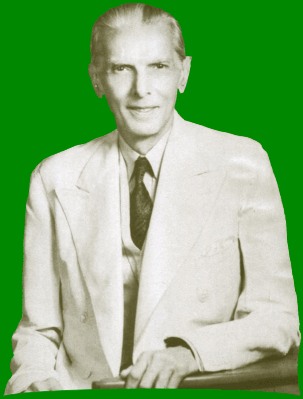
Muhammad Ali Jinnah Not A Freedom Fighter: Pak Islamists.

A major Islamist party has refused to recognise the contribution of Muhammad Ali Jinnah in the creation of Pakistan and has dropped his name from the list of leaders to be honoured at a special convention for freedom fighters.

Sparking a new controversy, Pakistan's Jamaati Ulema Islami (JUI) party of Maulana Fazlur Rehman, the Opposition leader in National Assembly, has said the country's founder Muhammad Ali Jinnah has done nothing worth remembering and dropped his name from the list of leaders to be honoured during special conventions it plans to organise to highlight services of ‘real freedom fighters’ who fought for the creation of Pakistan.

The JUI, headed by Rehman, would organise conventions in its stronghold Peshawar and other Pakistani cities this year to pay tributes to the ‘heroes’ who played an important role in the creation of Pakistan, ignoring Jinnah, regarded officially as Quaid-e-Azam (father of the nation) in Pakistan.

The conventions would also ignore Jinnah's companions, JUI leaders said. Instead the conventions would focus on the services of ‘real freedom fighters’, JUIs Information Secretary Maulana Amjad Khan was quoted as saying at Lahore by the Daily Times on Friday.
Image - Source

Labels:

!-- End #sidebar -->
Malaysia Blog Sites Listing Check Web Rank World Top Blogs - Blog TopSites hits Blog Portal